

System type
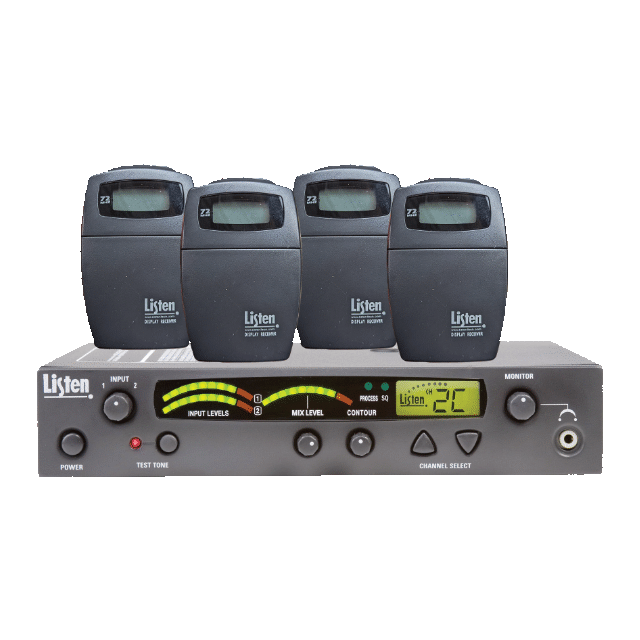
A frequency modulation (FM) or digital RF-based assistive listening system designed to transmit audio directly to a listener’s receiver, reducing the impact of background noise and distance. The kit typically includes a transmitter, one or more receivers, and compatible earphones or neckloops for use with hearing aids. It is intended for use in classrooms, meeting rooms, houses of worship, and other environments where clear audio access is needed.
Transmitter
The transmitter connects to an audio source such as a microphone, PA system, or audio output and broadcasts the signal wirelessly to receivers within range. Most kits support a transmission range of 150 to 300 feet in open environments, depending on the model. Audio input options typically include a 3.5mm jack, XLR input, or direct microphone connection via a lapel or handheld mic.
Receiver
Receivers are compact, portable devices worn or held by the listener to pick up the transmitted audio signal. They connect to earphones, headphones, or inductive neckloops, the latter of which couple directly with telecoil-equipped hearing aids. Volume control and channel selection are typically available on the receiver, allowing individual listeners to adjust settings to their preference.
Compliance & compatibility
Assistive listening systems are required under the Americans with Disabilities Act (ADA) in many public assembly areas, making these kits essential for ADA-compliant facilities. Most systems operate on dedicated frequency bands to minimize interference from other wireless devices. Compatibility with telecoil-enabled hearing aids and cochlear implants ensures accessibility for a wide range of users with hearing loss.